Precision steel pipes improve steering systems by enhancing durability, reducing weight, and ensuring smooth performance. 🚗
Precision steel pipes provide excellent durability, corrosion resistance, and high precision, making them essential for automotive steering systems.
Precision steel pipes are the backbone of efficient and reliable automotive steering systems. Let’s dive deeper into their benefits.
What Are the Main Benefits of Using Precision Steel Tubes in Automotive Steering Systems?
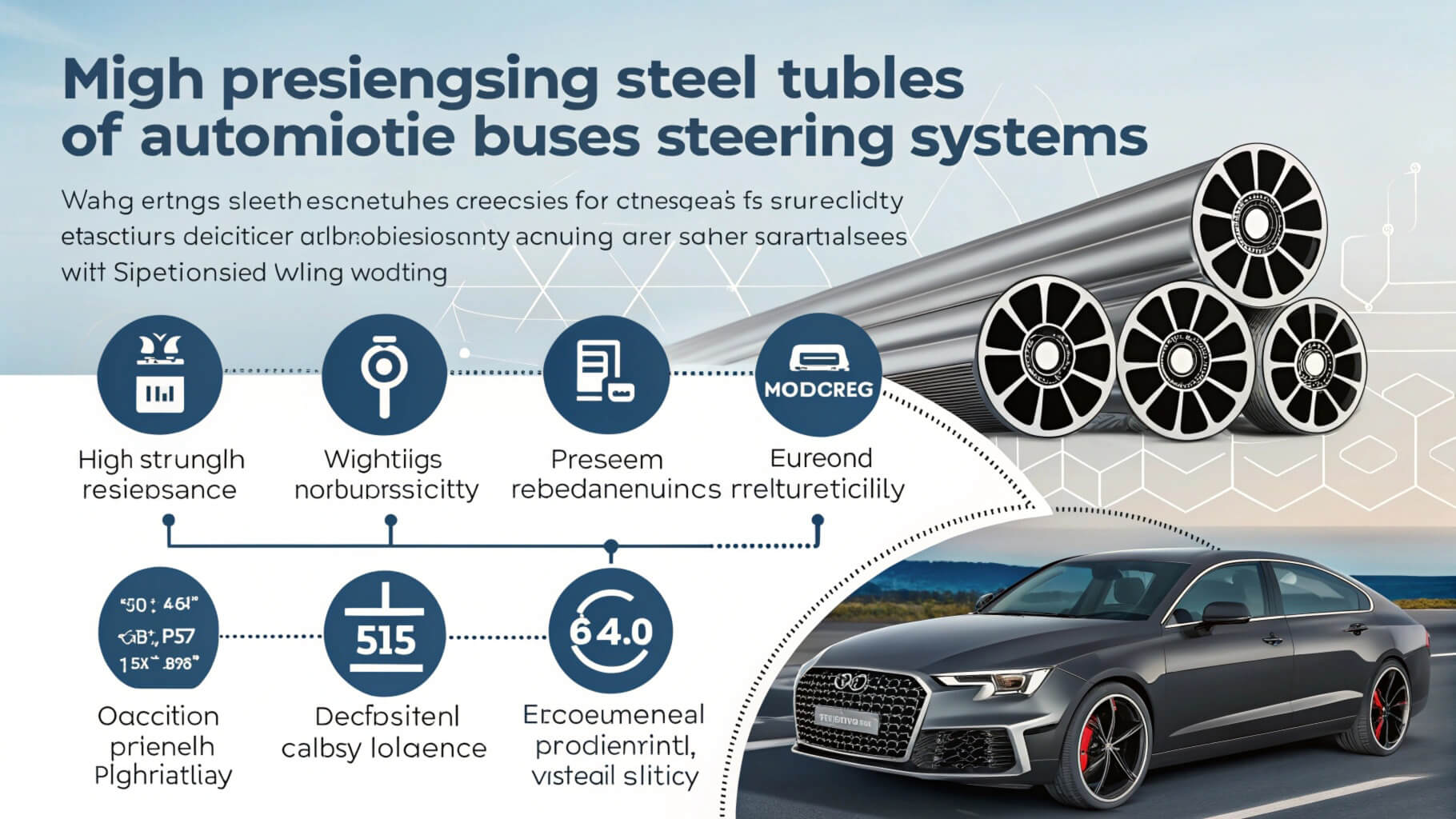
Precision steel tubes are the preferred choice for automotive steering systems due to their unique properties. These include high strength, corrosion resistance[^1], and precision dimensional tolerances.
Precision steel tubes offer reduced weight, excellent durability, and high corrosion resistance, ensuring reliability in automotive applications.
Dive Deeper: Why Precision Steel Tubes Are Essential
Precision steel tubes are designed to meet the demands of automotive engineering. They ensure safety and performance even under challenging conditions. Their lightweight nature reduces overall vehicle weight, enhancing Additionally, their superior corrosion resistance minimizes wear over time.
Key Benefits Table
| Feature | Impact |
|---|---|
| High Strength | Enhances steering system durability. |
| Corrosion Resistance | Prolongs system life in harsh conditions. |
| Precision Tolerances | Ensures seamless integration. |
| Lightweight Construction | Improves fuel efficiency. |
Semantic keywords: used precision steel pipe for automotive steering, best precision steel pipe for automotive steering.
How Do Precision Steel Tubes Contribute to the Overall Performance of a Vehicle's Steering System?
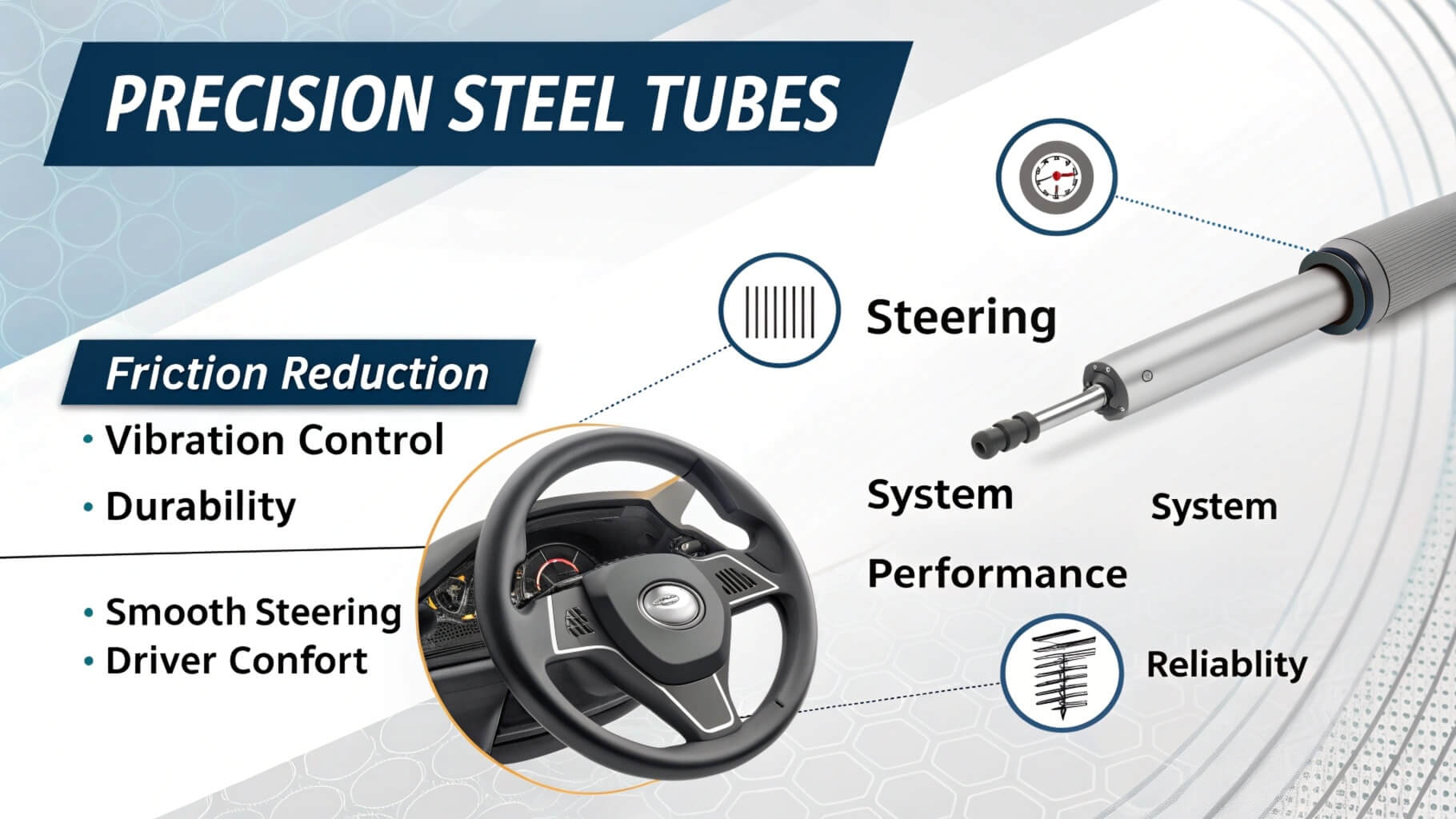
Precision steel tubes ensure consistent and smooth steering performance. They minimize friction and reduce vibrations, improving the driver’s control over the vehicle.
Precision steel tubes enhance steering control by reducing vibrations[^3], ensuring driver comfort, and maintaining system reliability.
Dive Deeper: Smooth Steering and Better Control
Smooth steering is vital for safety and comfort. Precision steel tubes achieve this by reducing friction between components. This results in a smoother and quieter driving experience. By ensuring precise alignment, these tubes contribute to greater accuracy in steering.
Contribution Highlights
- Friction Reduction: Lowers component wear.
- Vibration Control: Enhances driver comfort.
- Durability: Provides long-term system reliability.
Semantic keywords: en 10305-2, en 10305-3.
What Types of Precision Steel Tubes Are Most Commonly Used in Automotive Steering Applications?
Precision steel tubes come in various specifications tailored to automotive needs. Common standards include EN 10305-2[^4], EN 10305-3, and EN 10305-5.
EN 10305 series tubes are widely used due to their high precision and compliance with automotive industry standards.
Dive Deeper: Standards That Define Quality
Different standards cater to specific requirements:
- EN 10305-2: Cold-drawn seamless precision tubes.
- EN 10305-3: Welded precision tubes with improved mechanical properties.
- EN 10305-5: Welded and cold-sized tubes for hydraulic systems.
Each type offers unique advantages. For instance, EN 10305-5 is ideal for applications requiring high pressure resistance.
Specification Table
| Standard | Key Features |
|---|---|
| EN 10305-2 | High strength, seamless design. |
| EN 10305-3 | Welded construction, improved fatigue. |
| EN 10305-5 | Cold sizing for hydraulic applications. |
Semantic keywords: best precision steel pipe for automotive steering, en 10305-5.

How Does the Corrosion Resistance of Precision Steel Tubes Impact Their Use in Automotive Steering Systems?
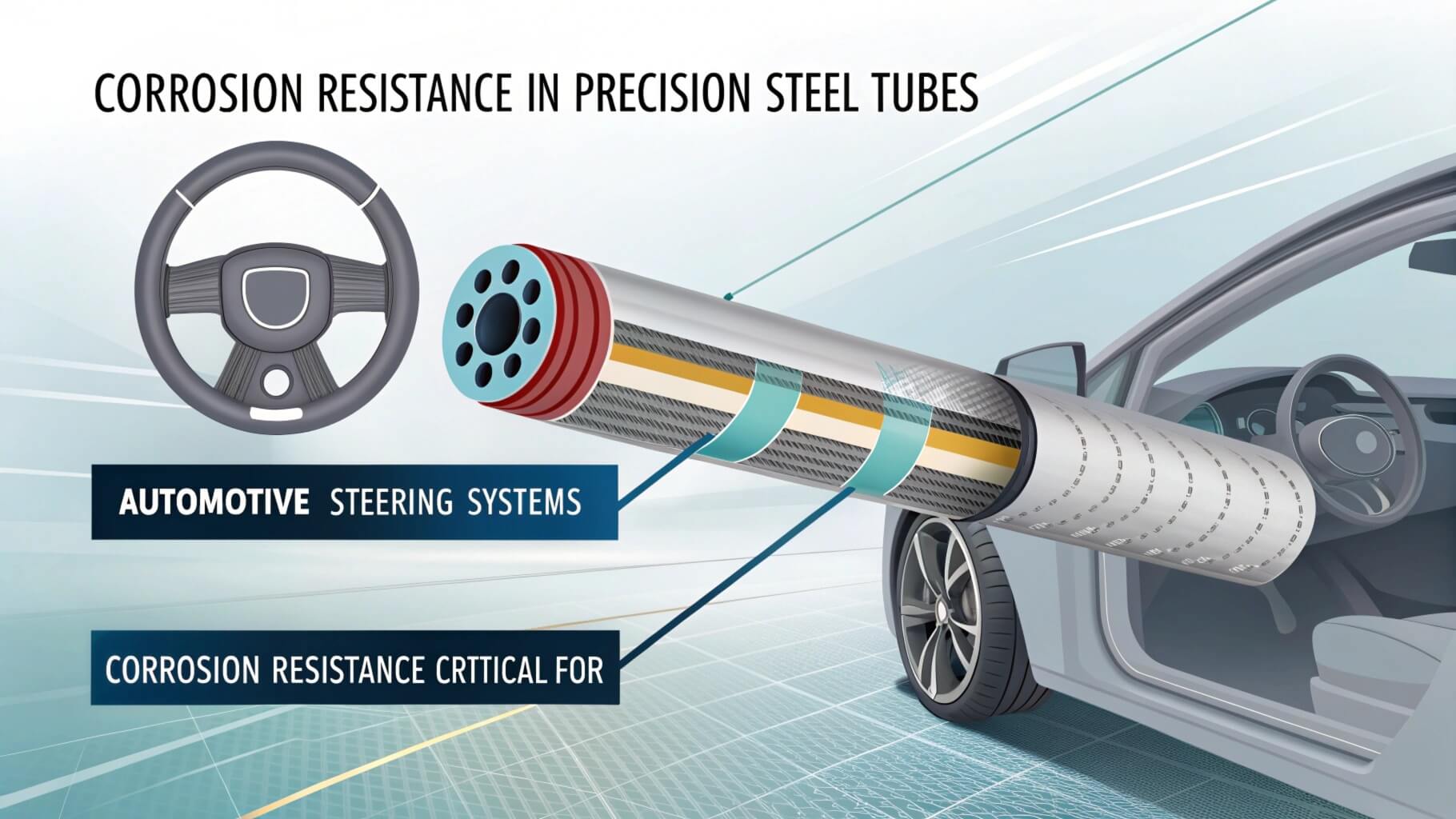
Corrosion resistance is critical for automotive parts. Precision steel tubes resist rust and wear, ensuring durability.
Corrosion-resistant tubes[^5] enhance system longevity, reducing maintenance costs and improving vehicle reliability.
Dive Deeper: Fighting Corrosion for Better Longevity
Automotive steering systems operate in diverse environments. Exposure to moisture and salt can accelerate corrosion. Precision steel tubes with advanced coatings combat this, extending their service life.
Anti-Corrosion Measures
- Galvanization: Adds a protective zinc layer.
- Coatings: Advanced polymer coatings resist moisture.
- Material Selection: Alloys with high rust resistance.
Semantic keywords: used precision steel pipe for automotive steering.
What Are the Key Requirements for Precision Steel Tubes Used in Steering Columns?
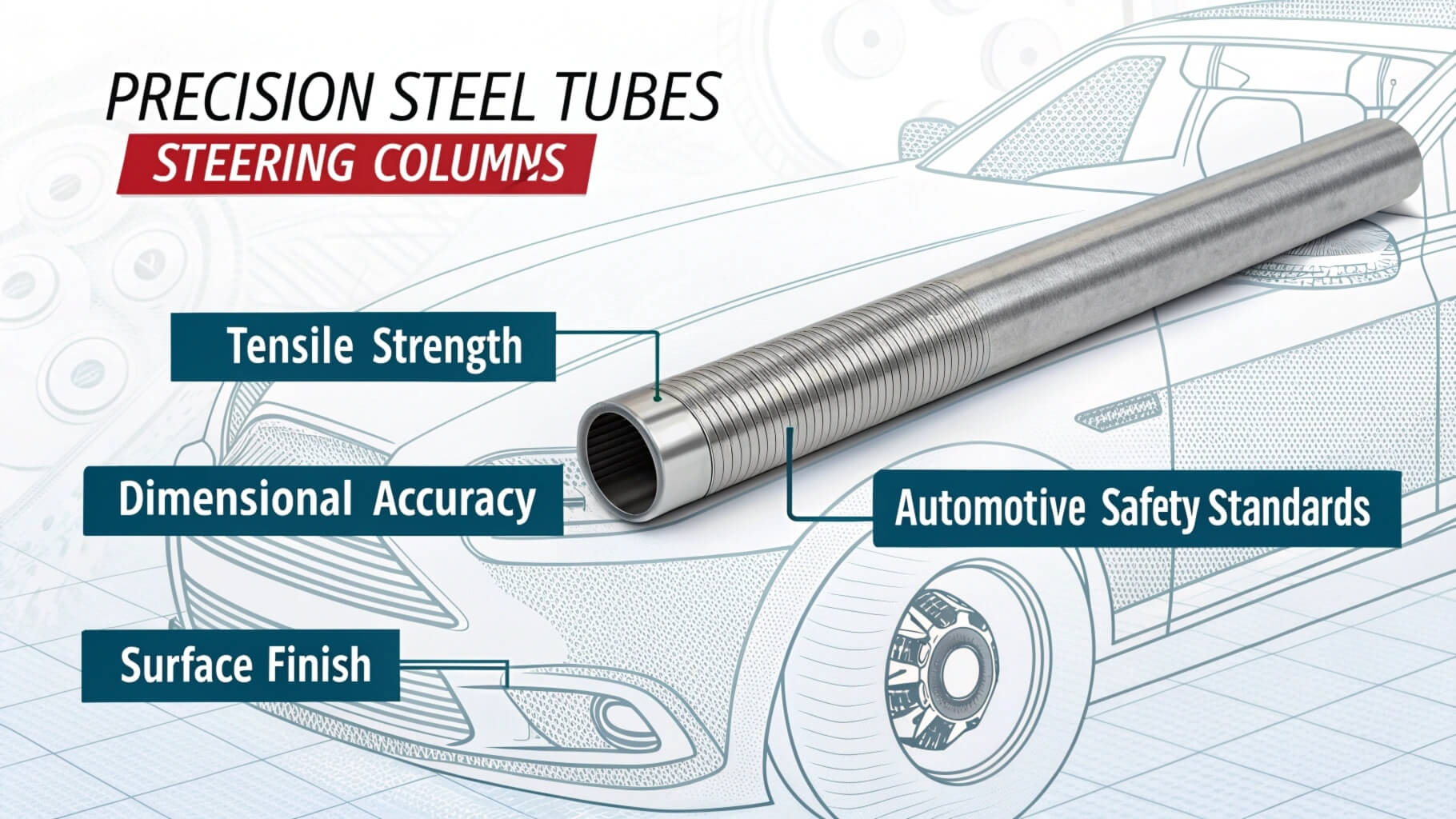
Precision steel tubes must meet strict standards to ensure safety. These include specific tensile strength, dimensional accuracy, and surface finish.
Precision steel tubes must comply with automotive safety standards[^6], ensuring reliability and seamless integration.
Dive Deeper: Ensuring Safety and Performance
Steering columns are critical for vehicle control. They require materials that can withstand mechanical stress. Precision steel tubes are manufactured to meet these requirements through rigorous testing.
Key Requirements Table
| Requirement | Importance |
|---|---|
| Tensile Strength | Resists mechanical stress. |
| Dimensional Accuracy | Ensures precise fit. |
| Corrosion Resistance | Prolongs lifespan. |
Semantic keywords: en 10305-3, en 10305-5.
Conclusion
Precision steel tubes are indispensable in automotive steering systems. Here’s why:
- They improve durability and safety.
- They enhance steering performance with reduced friction.
- They meet diverse automotive standards like EN 10305 series.
- They resist corrosion, ensuring longevity.
- They fulfill key safety requirements with precision engineering.
Precision steel tubes ensure safe, reliable, and smooth steering performance.