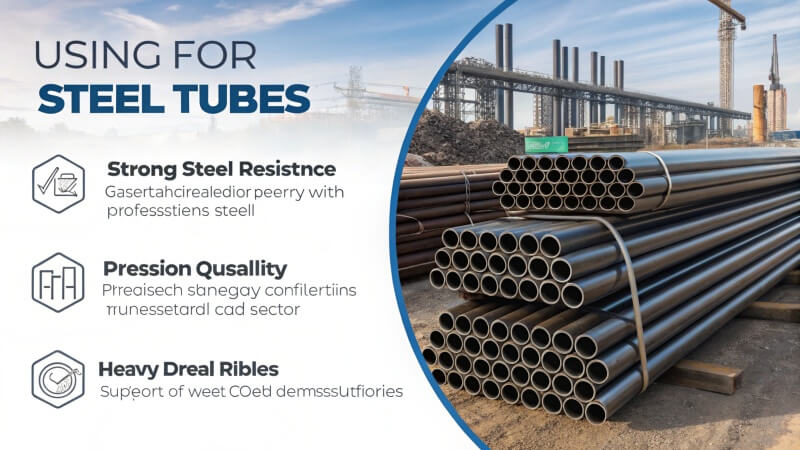
Precision steel tubes solve the problem of delivering high performance in demanding applications. Their versatility ensures wide use.
Precision steel tubes are used in industries like automotive, construction, and hydraulics due to their strength and accuracy.
Discover how precision steel tubes meet diverse industrial needs and how they benefit your projects.
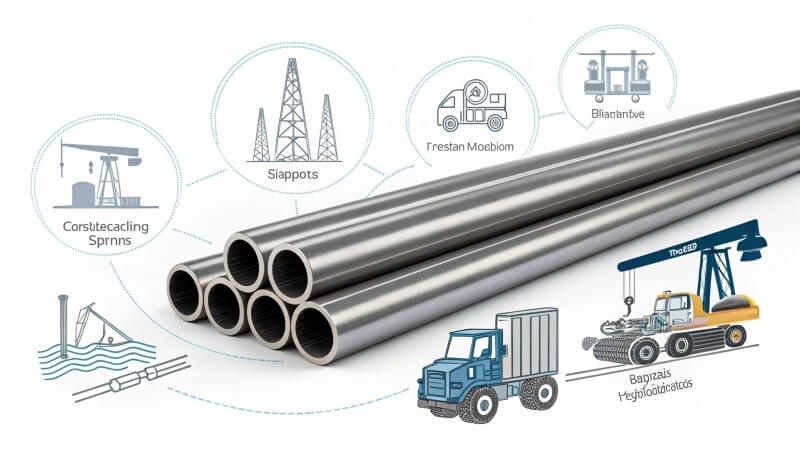
What are the uses of precision tubes?
Precision tubes are vital for industries needing durability and dimensional accuracy. They help improve operational efficiency.
Precision steel tubes are used for machine components, automotive parts, and fluid systems, providing high strength and efficiency.
Dive deeper: Why precision matters in steel tubes
Precision steel tubes are engineered with tight tolerances. This makes them ideal for systems requiring consistent performance. They are made using advanced processes like seamless cold-drawn techniques, which improve durability and finish.
Common applications of precision steel tubes:
| Industry | Use case | Example Product |
|---|---|---|
| Automotive | Hydraulic systems, suspension parts | Seamless stainless steel tube |
| Machinery | High-pressure systems | Thin steel tube |
| Aerospace | Lightweight structural components | Precision stainless tube |
Their consistent dimensions and smooth surfaces reduce friction in hydraulic and pneumatic systems. Companies like Fine Tubes Ltd. and Superior Tube supply high-quality options for such applications.

Where are steel tubes used?
Steel tubes are widely used in industries where strength and versatility are key. They are integral to modern infrastructure.
Steel tubes are used in construction, machinery, energy sectors, and even furniture manufacturing due to their adaptability.
Dive deeper: Versatility of steel tubes
Steel tubes provide solutions for diverse industrial needs. From structural applications to fluid transport, their utility is unmatched.
Benefits of using steel tubes:
- Strength and durability: Withstand heavy loads and harsh conditions.
- Corrosion resistance: Ideal for outdoor and marine environments.
- Customizable sizes: Options like thin steel tubes and precision tubes cater to specific requirements.
In the energy sector, seamless cold-drawn precision steel tubes are used for pipelines and heat exchangers. In construction, these tubes serve as support structures and frames.

What is steel tubing used for?
Steel tubing offers solutions for transporting fluids, structural support, and creating durable machinery components.
Steel tubing is used for fluid conveyance, structural applications, and creating strong, lightweight assemblies.
Dive deeper: Key roles of steel tubing
Steel tubing is essential for maintaining operational safety and efficiency. In fluid systems, it ensures leak-proof performance. Structural tubing enhances the stability of frameworks.
Comparison of steel tubing types:
| Type | Features | Common Use |
|---|---|---|
| Seamless stainless steel tube | No welding seams, corrosion-resistant | High-pressure systems |
| Precision stainless tube | Tight tolerances, smooth finish | Hydraulic and pneumatic applications |
| Thin steel tube | Lightweight, easy to handle | Furniture and lightweight structures |
These tubes are also recyclable, making them an eco-friendly choice for sustainable projects. Their reliability reduces maintenance costs over time.
What are the two types of steel tubing used in hydraulic systems?
Hydraulic systems rely on steel tubing for efficient fluid transmission. The two main types are seamless and welded tubes.
Seamless and welded steel tubes are used in hydraulic systems, offering durability and resistance to high pressure.
Dive deeper: Hydraulic system tubing types
Hydraulic systems need tubing that withstands high pressure and prevents leaks. Seamless tubing is made from a single piece of steel, offering better strength and uniformity. Welded tubes, on the other hand, are cost-effective and suitable for moderate-pressure systems.
Comparison of seamless and welded tubes:
| Type | Advantages | Disadvantages |
|---|---|---|
| Seamless | High strength, uniformity | Higher cost |
| Welded | Cost-effective, widely available | Weaker at the seam, limited to lower pressures |
For demanding applications, superior tube options like seamless precision tubes provide unmatched reliability. This makes them the preferred choice for hydraulic systems in construction and manufacturing.
Conclusion
To summarize:
- Precision steel tubes are essential for industries requiring durability and accuracy.
- Applications range from automotive to hydraulic systems and construction.
- Types like seamless stainless steel tubes and thin steel tubes offer tailored solutions.
- Hydraulic systems benefit most from seamless tubing due to its high-pressure resistance.
- Understanding the applications helps in selecting the right steel tubing for specific needs.
Choosing precision steel tubes ensures efficiency, strength, and adaptability for diverse industrial applications.