Stainless steel comes in various grades. Picking the right one means balancing quality and cost.
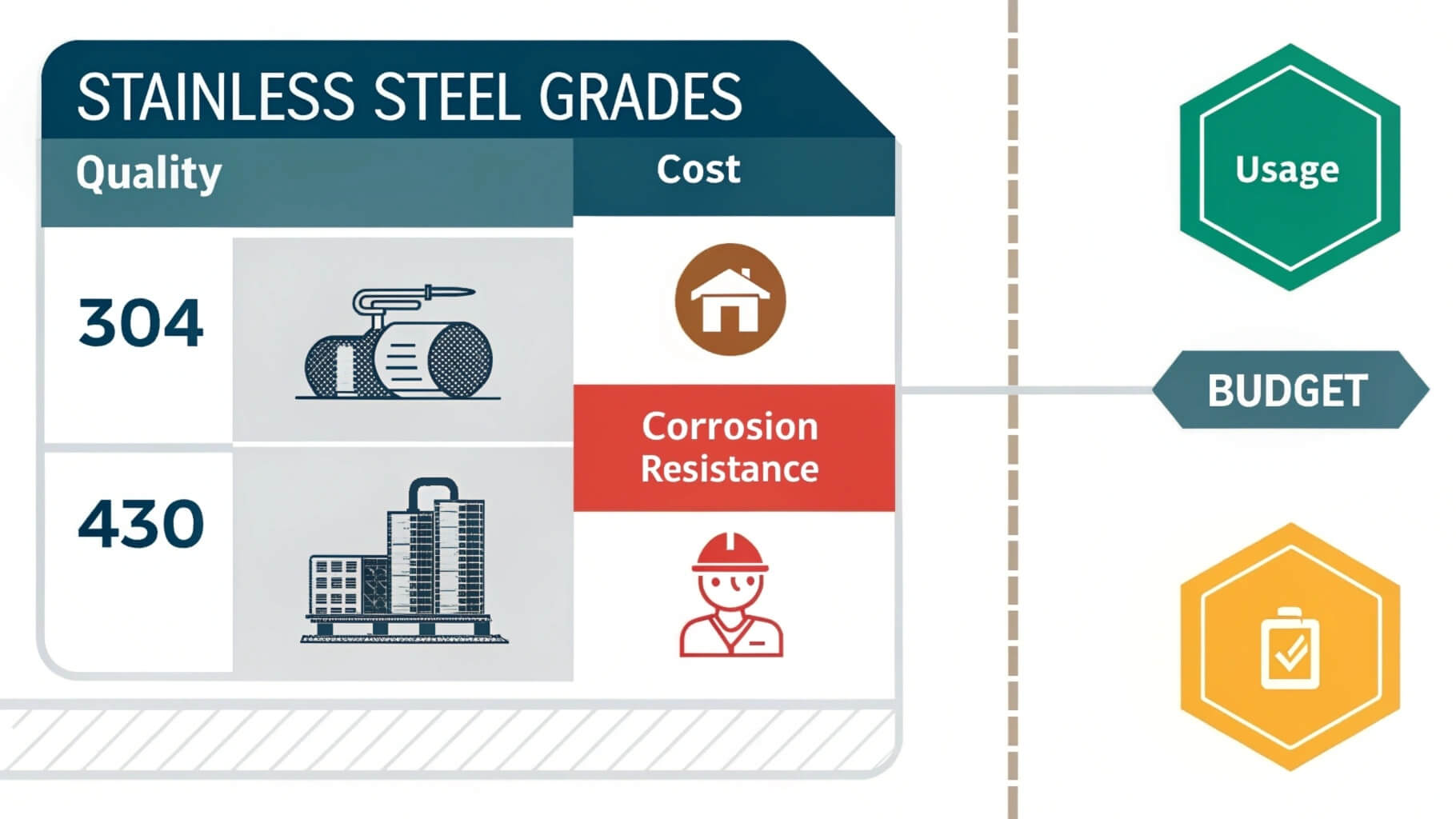
Stainless steel 304 and 430 have different properties. Choosing between them depends on usage, budget, and corrosion resistance.
Each steel grade has strengths. Let’s dive into these differences to help you decide.
Which Is Better, 430 or 304 Stainless Steel?
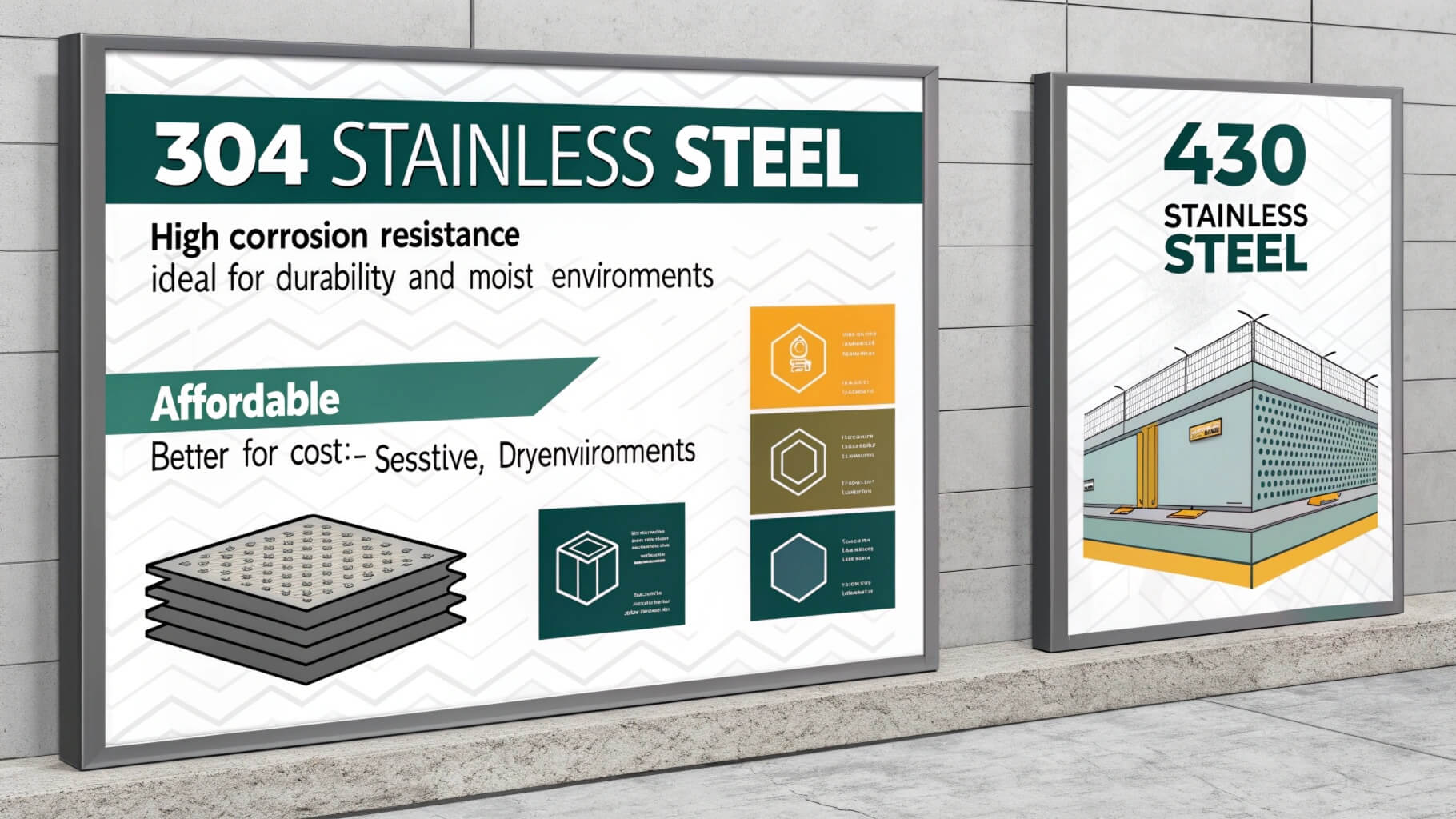
304 stainless steel1 offers high corrosion resistance, while 430 stainless steel2 excels in affordability. Which fits your needs?
304 stainless steel is ideal for durability and corrosion resistance. 430 is better for cost-sensitive, non-corrosive environments.
Dive Deeper
304 stainless steel is an austenitic alloy. It contains higher chromium and nickel levels, giving it excellent corrosion resistance, especially in moist or acidic conditions. In contrast, 430 is ferritic and contains less nickel. While 430 performs well in dry environments, it may corrode in wet or salty areas.
Properties Comparison Table
| Property | Stainless Steel 304 | Stainless Steel 430 |
|---|---|---|
| Corrosion Resistance | Excellent | Moderate |
| Cost | Higher | Lower |
| Magnetic Properties | Non-magnetic | Magnetic |
| Food-Grade Suitability | Yes | Limited |
| Common Applications | Kitchenware, piping | Appliances, decorative trim |
Key Uses for 304 vs. 430 Stainless Steel
- 304: Kitchen equipment, outdoor applications, medical tools.
- 430: Indoor appliances, decorative panels, less-demanding industrial uses.
What Is 430 Stainless Steel Used For?
430 stainless steel3 is common for appliances and decorative uses. But how does it perform long-term?
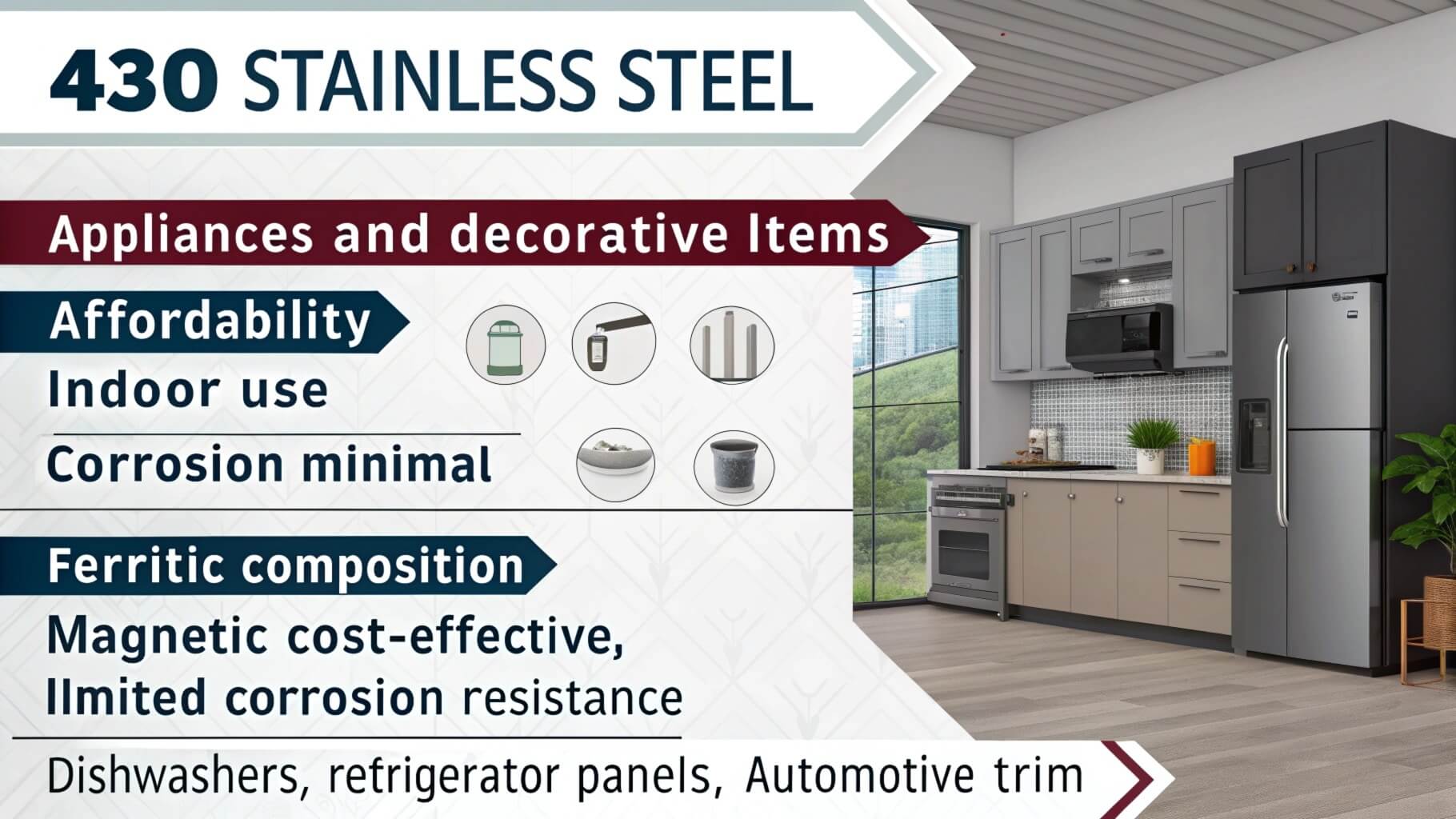
430 stainless steel is affordable and used for indoor applications where corrosion is less of a concern.
Dive Deeper
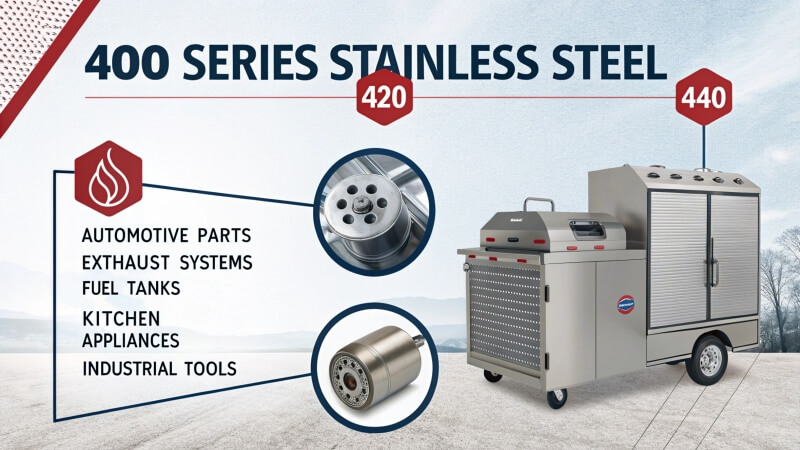
The ferritic composition of 430 makes it magnetic and cost-effective. Its lower chromium content limits its corrosion resistance, but it works well in dry environments. This grade is often used in dishwashers, refrigerator panels, and automotive trim.
Food-Grade Suitability
While 430 is sometimes used for food contact, it doesn’t match the hygiene levels of 304.
| Application | Suitability of 430 Stainless Steel |
|---|---|
| Cookware | Moderate |
| Food Storage | Limited |
| Kitchen Surfaces | Acceptable for dry areas |
Balancing Costs and Requirements
If your project demands corrosion resistance and hygiene, 3044 is a better fit despite its higher cost. For non-demanding environments, 430’s affordability shines.
Will Stainless Steel 304 Rust?
Rust-resistant doesn’t mean rust-proof. Even 304 has limits. How can you extend its life?
Stainless steel 3045 resists rust but can corrode under extreme conditions like saltwater or high acidity.
Dive Deeper
304 stainless steel performs well in most environments. However, prolonged exposure to saltwater or acidic chemicals may lead to pitting. Proper maintenance, such as regular cleaning and avoiding harsh abrasives, minimizes this risk.
Maintenance Tips for 304 Stainless Steel
- Clean surfaces regularly with mild soap and water.
- Avoid using steel wool or harsh cleaners.
- Use protective coatings in harsh environments.
Long-Term Durability
| Environment | Risk of Rust (304 Stainless Steel) |
|---|---|
| Indoor Dry | Low |
| Outdoor Humid | Moderate |
| Saltwater Exposure | High |
Conclusion
To summarize the differences between stainless steel 304 and 430:
- Corrosion Resistance: 304 is superior for moist and acidic conditions.
- Cost: 430 is more affordable, ideal for budget-conscious projects.
- Applications: 304 is used in demanding environments; 430 is suitable for indoor, non-corrosive uses.
- Magnetic Properties: 430 is magnetic, unlike 304.
- Food Grade: Both are usable, but 304 is the better option for hygiene.
Choosing between these grades depends on your application and budget. Opt for 304 when durability matters most and 430 for less-demanding projects.
-
Overview of 304 stainless steel, including its properties and common uses. ↩
-
Benefits and limitations of 430 stainless steel in various applications. ↩
-
Common applications and performance details of 430 stainless steel. ↩
-
Explanation of food-grade suitability for 304 stainless steel. ↩
-
Maintenance practices to prevent rust in 304 stainless steel under extreme conditions. ↩