

The problem: Measuring stainless steel tubing can be confusing for buyers.
The solution: Understand the basics to ensure proper sizing.
Stainless steel tubing is measured using industry standards, typically by its outer diameter (OD), wall thickness, or inner diameter (ID), depending on the application.
Want clarity on how stainless steel tubing is measured? Read on to get all the details you need.
How is stainless tubing measured?
The problem: Incorrect measurements lead to wrong orders.
The solution: Learn industry-standard methods to measure tubing.
Stainless tubing is measured by outer diameter (OD)[^1], wall thickness, and sometimes inner diameter (ID) for specific uses.
Measuring stainless tubing depends on its application. For most tubing, the OD is the primary measurement, followed by the wall thickness to determine the inner diameter. The size is also influenced by the material grade, such as 304 or 316 stainless steel[^2].
Standard measurement units:
- How is stainless steel tubing measured in mm?[^3] Millimeters are used for precise and metric measurements.
- How is stainless steel tubing measured in inches?[^4] Inches are common in regions using imperial systems.
Comparison of measurement units:
| Measurement System | Common Use Case | Example Size |
|---|---|---|
| Metric (mm) | Engineering applications | 25.4 mm OD |
| Imperial (inches) | Construction standards | 1 inch OD |
How do you measure steel tubing?
The problem: Buyers often misinterpret tubing specifications.
The solution: Use reliable tools and methods for accurate measurements.
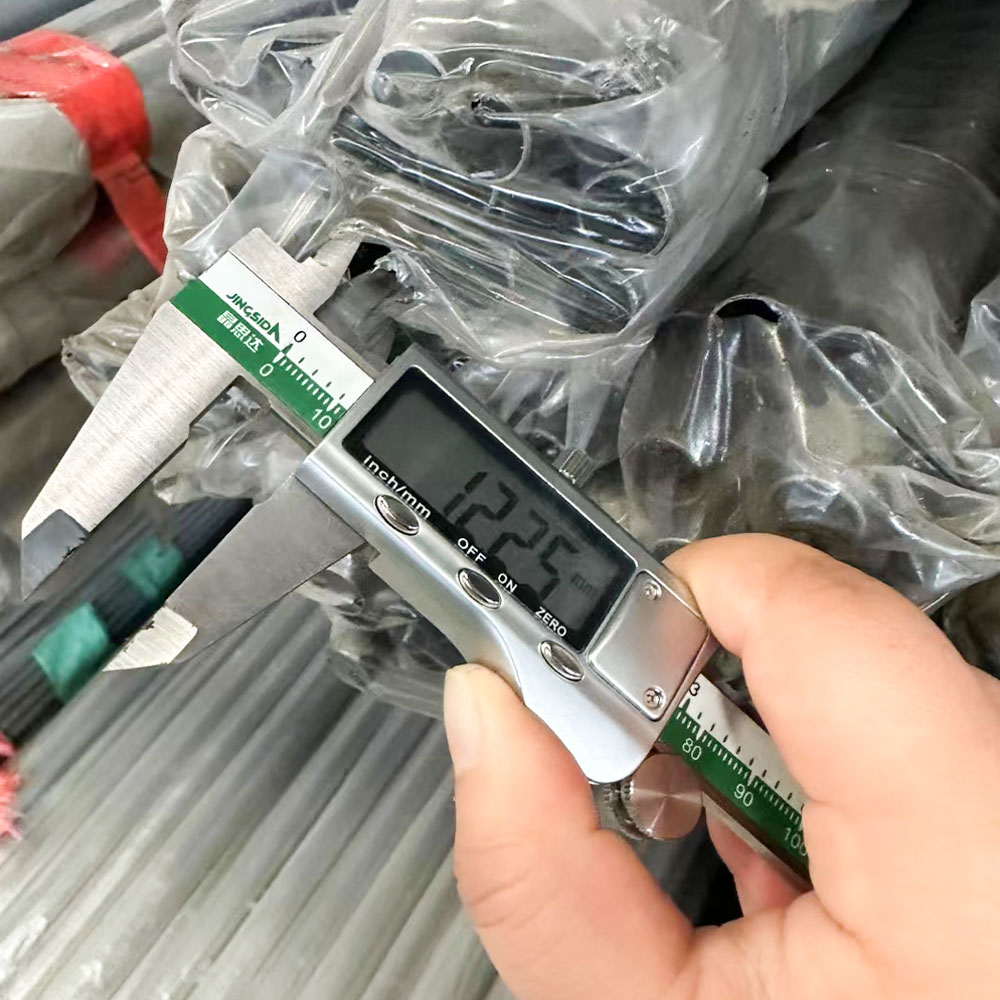
Steel tubing is measured using calipers[^5], micrometers, or size charts for precision. These methods ensure correct OD, ID, and wall thickness readings.
To measure tubing accurately, you need basic tools. Use a caliper for the OD and wall thickness. Measure the ID by subtracting twice the wall thickness from the OD. Some industries also use size charts[^6] to simplify measurements for common tubing sizes like 304 stainless steel.
Measuring tools:
- Micrometer[^7]: Provides precise thickness readings.
- Caliper: Measures both OD and wall thickness.
- Stainless steel tubing size chart: Helps cross-reference standard sizes.
Sample tubing size chart:
| Tube Grade | Outer Diameter (OD) | Wall Thickness | Inner Diameter (ID) |
|---|---|---|---|
| 304 Stainless Steel | 50.8 mm | 2 mm | 46.8 mm |
| 316 Stainless Steel | 1 inch | 0.065 inch | 0.870 inch |

Is steel tubing measured ID or OD?
The problem: Confusion between ID and OD measurements can cause mismatched components.
The solution: Know when to use ID or OD measurements.
[Steel tubing is typically measured by OD](Steel tubing is typically measured by OD)[^8], especially for structural and industrial applications. However, ID is used for certain flow-related projects.
Understanding when to use ID or OD depends on the application. OD is the industry standard for tubing, particularly in construction. For fluid transport, the ID becomes critical as it determines the flow capacity. Knowing both measurements helps in selecting the right product.
Applications of OD vs. ID:
- OD-focused sizing: Used in frameworks and structural applications.
- ID-focused sizing: Important in piping for liquids or gases.
OD vs. ID in applications:
| Measurement Focus | Applications | Examples |
|---|---|---|
| OD | Structural tubing, framing | Handrails, supports |
| ID | Fluid transport | Pipelines, plumbing |
How is stainless steel measured?
The problem: Misunderstanding measuring methods can lead to order delays.
The solution: Understand all key parameters for accurate measurement.
Stainless steel is measured[^9] by dimensions such as thickness, width, OD, and length, depending on the product type and its use.
Stainless steel measurement varies by product. Tubing focuses on OD and wall thickness, while sheets emphasize thickness and width. For stainless steel plates, both thickness and length are critical. In many cases, manufacturers provide standard charts[^10] to simplify ordering.
Factors affecting measurement:
- Material grade, such as 304 or 316[^11].
- Application-specific needs, like food-grade requirements.
- Industry standards for metric or imperial sizing.
Stainless steel measurement comparison:
| Product Type | Primary Measurement | Example |
|---|---|---|
| Tubing | OD, wall thickness | 25 mm OD, 1.5 mm WT |
| Sheets | Thickness, width | 3 mm thick, 1 m wide |
| Plates | Thickness, length | 10 mm, 2 m long |
Conclusion
To measure stainless steel tubing effectively:
- Understand the application requirements (ID vs. OD).
- Use precise tools like calipers and micrometers.
- Refer to standard size charts for common grades.
- Be aware of metric and imperial system differences.
- Consider additional dimensions like wall thickness and length.
Proper measurement ensures accurate ordering and prevents costly mistakes. Make use of this guide to simplify your sourcing process.