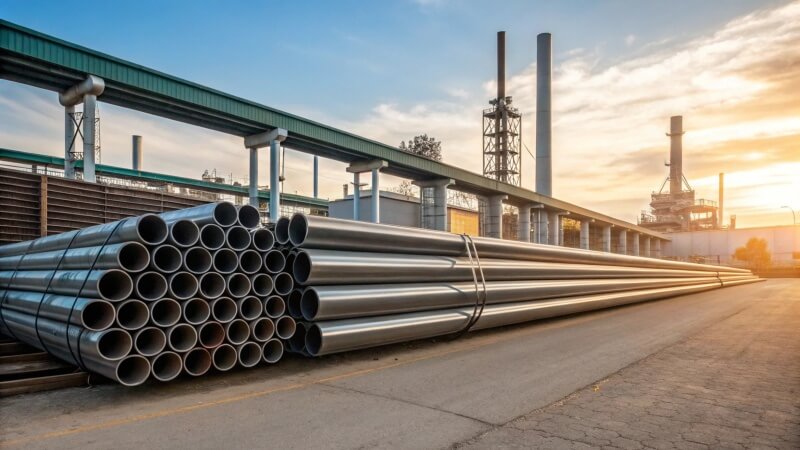
Steel pipes serve as vital components in industries such as construction, oil and gas, and manufacturing. Gaining insight into the four principal manufacturing processes is crucial for choosing the most suitable pipe type according to specific application requirements.
The production of steel pipes involves four primary processes: raw material selection, heating and rolling, welding, and sizing and cutting. These processes exert a defining influence on the mechanical properties of the final pipe and its suitability for the intended application.
A detailed exploration of each of these processes will shed further light on their role in shaping the performance and quality of steel pipes.
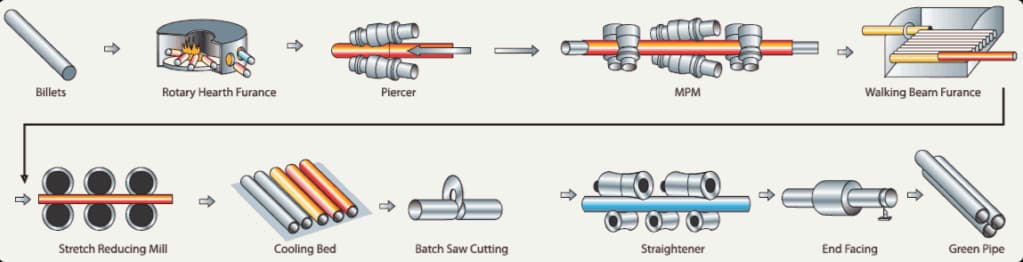
1. Raw Material Selection
The quality and composition of the raw materials used directly influence the ultimate properties of steel pipes. Material selection emphasizes the use of high-quality alloys and the precise control of variables such as carbon content.
The process of selecting high-quality steel alloys accounts for carbon content and other alloying elements, ensuring characteristics such as strength, corrosion resistance, and durability in the final product.
Steel pipes commence with the selection of premium-grade raw materials, typically carbon steel or alloyed steel, with careful consideration given to the carbon content, which significantly influences strength and corrosion resistance. In specific applications, supplementary alloys may also be employed to enhance particular attributes, such as weldability or resistance to high temperatures. By prioritizing the careful sourcing of materials, manufacturers can guarantee that pipes satisfy the mechanical and material requisites necessary for diverse applications.
Learn more about raw materials for steel pipes | Steel alloys in pipe manufacturing
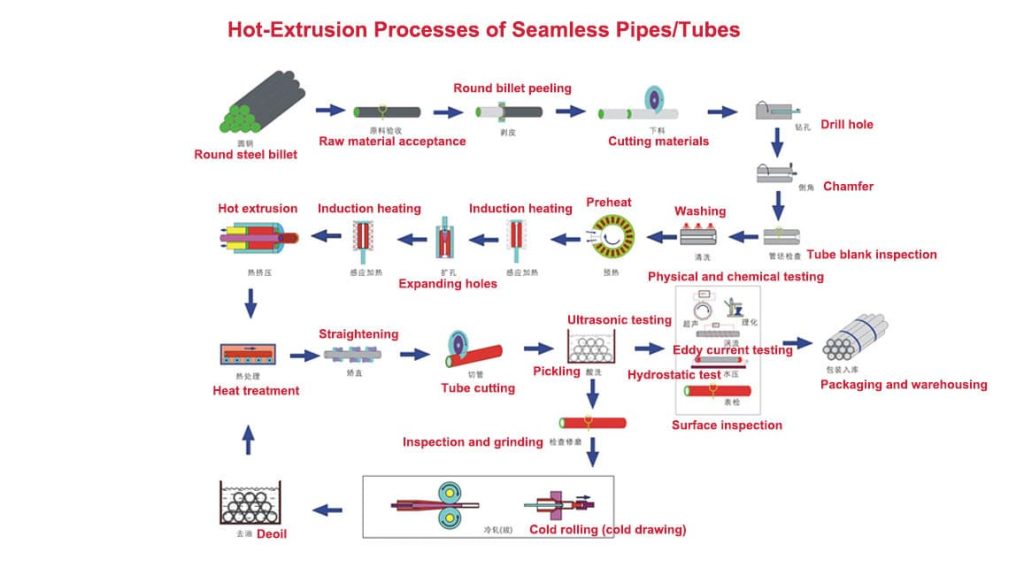
2. Heating and Rolling
The processes of heating and rolling are critical for shaping steel into the appropriate form, ensuring the material’s malleability and enabling the creation of pipes with various dimensions and thicknesses.
To achieve the desired diameter and thickness, the steel is heated to temperatures ranging from 2100°F to 2400°F before undergoing a series of passes through rolling mills.
Once the steel has been selected, it enters the heating stage within specialized furnaces where temperatures are elevated to a range between 2100°F and 2400°F. This high heat treatment imparts the necessary malleability to the steel, allowing it to be channeled through a series of rolling stands, gradually taking on and retaining the cylindrical form necessary for pipe production. The number of passes through the rollers is determined by the intended pipe thickness and diameter. Consequently, this process, applied to both seamless and welded pipes, establishes the fundamental shape from which further manufacturing steps will follow.
Heating process for steel pipes | Steel pipe rolling process
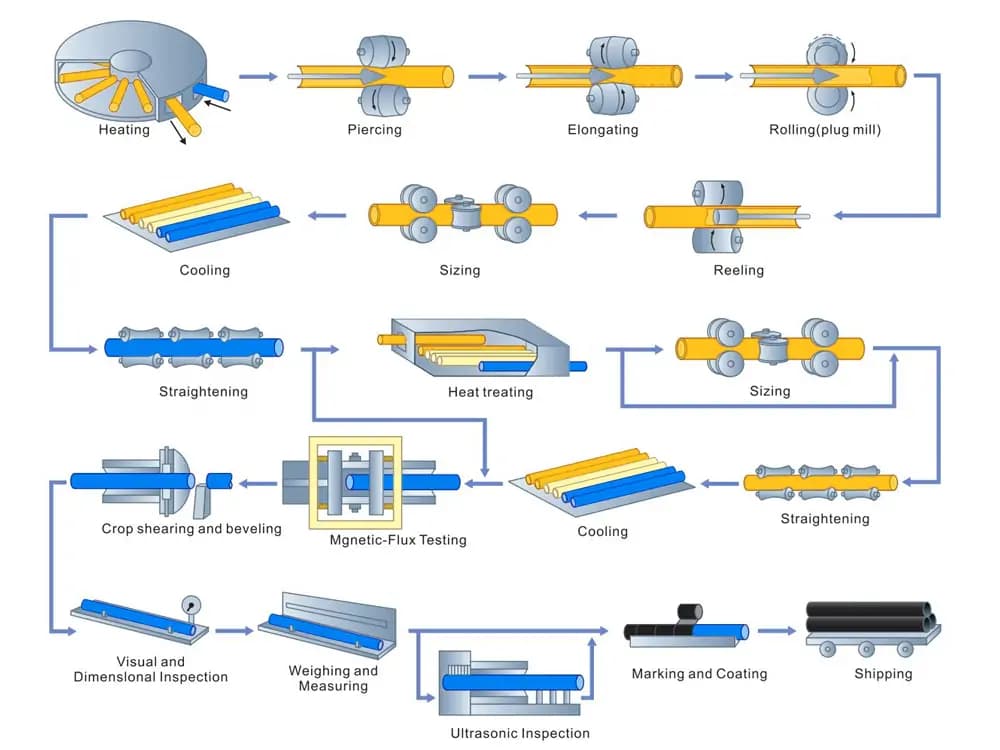
3. Welding
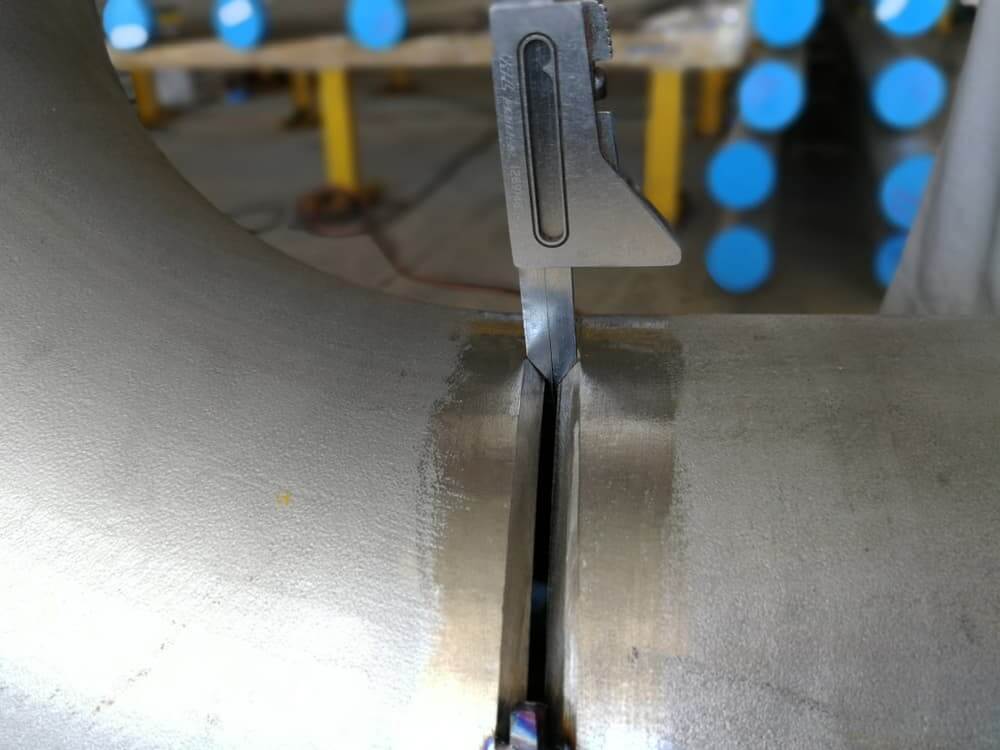
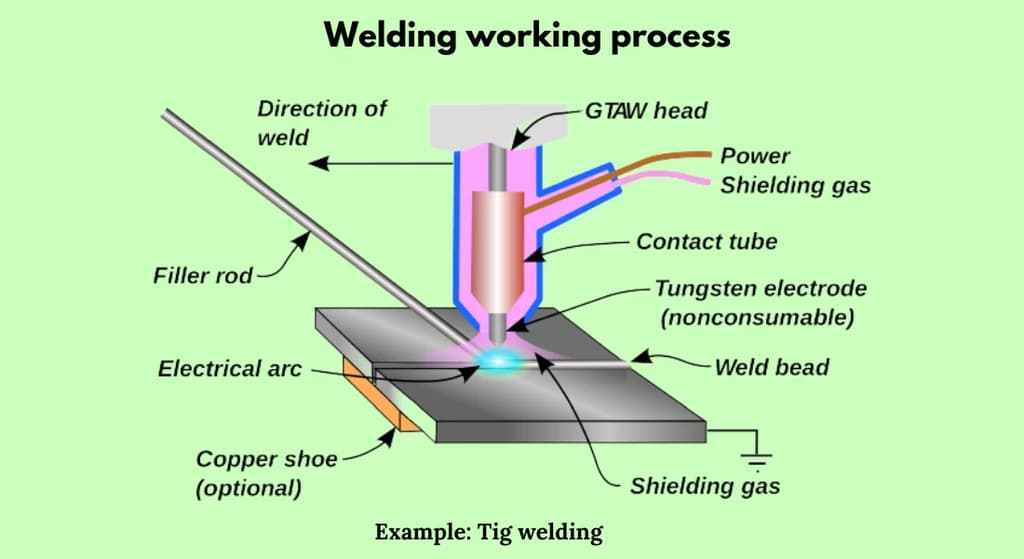
In the production of welded pipes, welding is a critical step, responsible for joining the edges of the rolled steel. The specific welding method employed directly impacts the strength, durability, and costs associated with the pipe.
The two primary methods for welding steel pipes are Electric Resistance Welding (ERW) and Submerged Arc Welding (SAW), each presenting distinct advantages tailored to different applications.
Welding represents a fundamental aspect of the manufacturing process for welded steel pipes, as this procedure effectively unites the edges of rolled steel. The two primary methods for this practice are Electric Resistance Welding (ERW) and Submerged Arc Welding (SAW). ERW involves the application of an electrical current through the steel edges to prompt heating and the resulting fusion. This method is recognized for its efficiency and cost-effectiveness, making it ideal for use in the fabrication of pipes with thinner walls. In contrast, SAW employs an electric arc to heat the steel edges, with the weld protected by a layer of flux. This technique is typically applied to the production of large-diameter pipes with thicker walls, where a higher level of strength must be achieved.
Learn about ERW welding | SAW welding explained
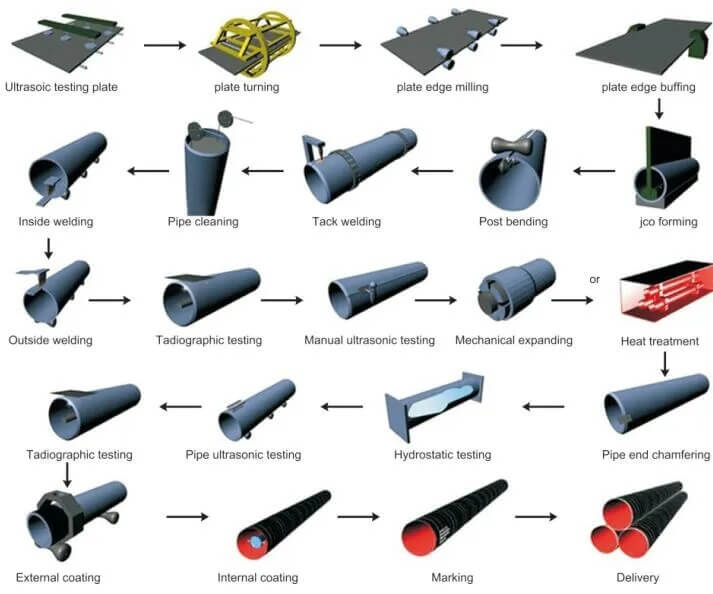
4. Sizing and Cutting
The final stages of the manufacturing process involve sizing and cutting the steel pipes to achieve the prescribed dimensions, rendering them immediately applicable for industrial use.
Post-welding, the pipes undergo sizing to achieve precise dimensions before being cut into specified lengths, preparing them for immediate use.
After the welding process or the application of the shaping method, the next step for the pipe is sizing, undertaken through the use of specialized rollers that adjust the pipe’s diameter to the required measurements. This process ensures that the resulting pipe conforms to the anticipated tolerances suitable for its assigned application. Subsequently, the pipe is subjected to cutting via sawing or the application of torches to segment it into individual units conforming to the specified length requirements. This final manufacturing stage readies the pipe for shipping and installation across an array of industrial sectors.
Steel pipe sizing process | Cutting methods for steel pipes
Conclusion
The steel pipe manufacturing process involves a series of well-coordinated steps: from raw material selection, heating and rolling, welding, to final sizing and cutting. Understanding these processes—whether you're choosing seamless or welded pipes—ensures that your project benefits from high-quality, durable pipes tailored to your specific needs.