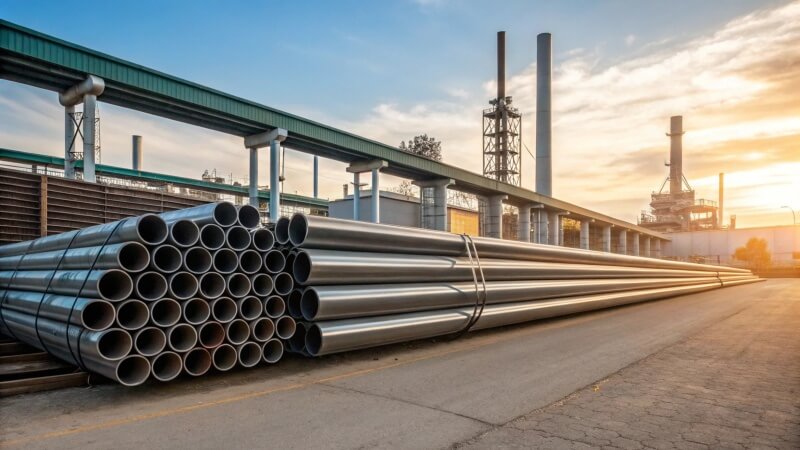
In high-pressure applications, seamless pipes are often the preferred choice over welded pipes due to their manufacturing process, which results in a uniformly consistent structure without seams. This distinct production method typically yields stronger and more durable pipes, making them the ideal solution for industries that demand uncompromising reliability.
Seamless pipes generally provide superior strength and resistance to pressure compared to welded pipes, thanks to their uniform structure. Welded pipes, while more cost-effective, may have weaker seams, rendering them more suitable for low-pressure applications.
Gain insights into the distinctions between seamless and welded pipes.
Explore detailed information on the manufacture of seamless pipes.
To comprehend the reasons behind the preference for seamless pipes in high-pressure environments, it is informative to compare the strengths, applications, and ongoing advancements in both types of pipes.
1. Strength Comparison: Seamless Pipes vs. Welded Pipes
Seamless Pipes:
Seamless pipes are crafted from a solid steel billet, resulting in a structure devoid of seams or welds. This seamless design imparts the capacity to withstand pressures up to 20% higher than welded pipes due to the absence of potential weak points. Additionally, seamless pipes exhibit high resistance to corrosion, rendering them particularly suitable for critical applications, such as oil and gas pipelines, where durability and reliability are vital.
Snippet: Seamless pipes, with their seamless design and higher resistance to corrosion, are reliably adept at withstanding greater pressures, best suited for essential applications.
Explore seamless pipe uses in high-pressure environments.
Learn more about seamless pipe strength.
Welded Pipes:
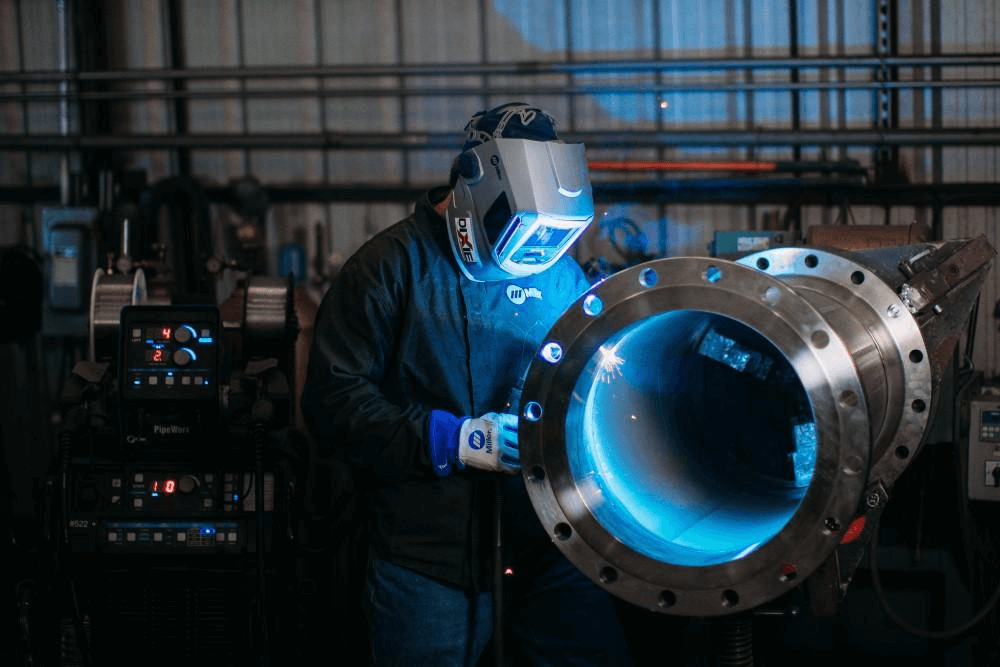
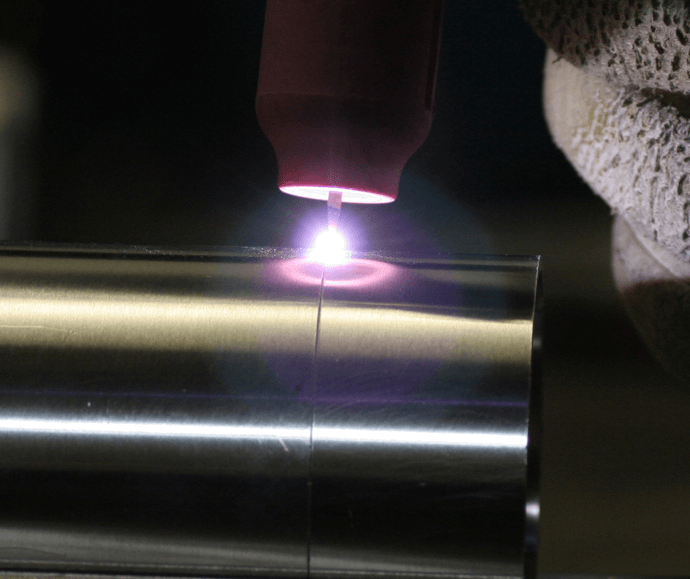
Manufactured by joining steel sheets or plates, welded pipes inherently incorporate seams which had historically been perceived as potential weak points. Nevertheless, advancements in welding technology have notably reinforced welded seams, enhancing the reliability of modern welded pipes across an array of operational conditions. Despite these improvements, welded pipes frequently necessitate additional testing, particularly for high-pressure applications, to validate their ability to withstand elevated stresses.
Snippet: Despite advancements, the seams inherent to welded pipes may still render them susceptible to potential weaknesses, necessitating rigorous testing, especially for applications involving high pressures.
Read about advancements in welded pipe strength.
Learn about testing requirements for welded pipes.


2. Applications of Seamless and Welded Pipes
Seamless Pipes:
Seamless pipes are the preferred choice in industries demanding high pressure tolerance while emphasizing reliability and safety. In critical sectors such as oil and gas and chemical processing, seamless pipes offer superior performance as they eliminate the risk of seam failures. Moreover, the absence of welds contributes to the uniformity of wall thickness, improving stability under variable pressure conditions.
Snippet: Industries operating under high-pressure requirements, such as the oil and gas sector, rely on seamless pipes for their resilience and reliability in demanding operational environments.
Learn why seamless pipes are preferred in oil and gas.
Explore seamless pipe applications in chemical processing.
Welded Pipes:
Welded pipes are valued for their versatility in engagements within construction and infrastructure projects, where cost considerations and standard sizing are paramount. These pipes find extensive use in water distribution, HVAC systems, and structural applications where they face relatively modest pressures. Cost-effective and capable of being manufactured in larger diameters, welded pipes afford a practical option for substantial projects.
Snippet: Welded pipes offer a cost-effective solution for construction projects that do not demand extreme tensile strength, as witnessed in applications for water supplies and HVAC systems.
Discover construction applications for welded pipes.
Read more on the versatility of welded pipes.

3. Cost Comparison for Large-Scale Projects
Seamless pipes generally entail higher production costs compared to welded pipes due to the complexity of their manufacturing process. Consequently, seamless pipes are most cost-effective in applications demanding high strength and resilience within smaller-scale projects. In contrast, welded pipes are the preferred choice for large-scale endeavors, prioritizing cost efficiency and not requiring the same level of resistance to extreme pressures.
Snippet: In large-scale projects, welded pipes present a cost-effective solution, while seamless pipes are typically reserved for applications necessitating superior strength.
Compare seamless vs. welded pipe costs.
Learn about budgeting for pipe materials.
Conclusion
In summary, seamless pipes generally offer superior strength due to their uniform structure and are ideal for high-pressure, critical applications. However, advancements in welding technology have improved the reliability of welded pipes, making them suitable for many construction and infrastructure projects. Choosing between seamless and welded pipes ultimately depends on balancing cost and performance needs for specific applications.