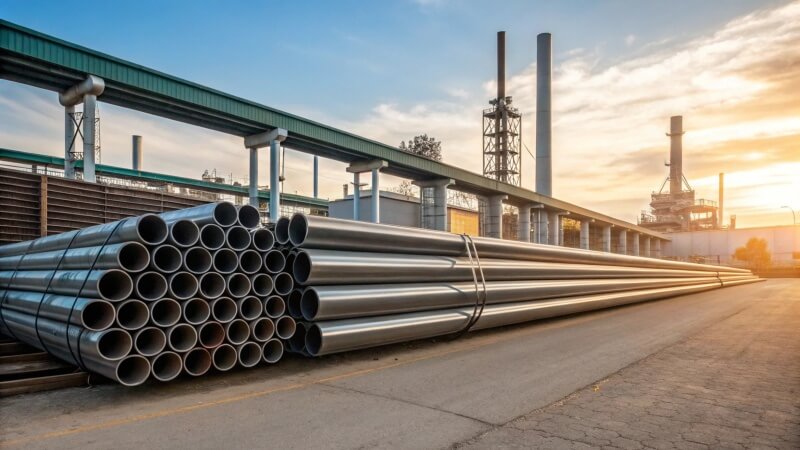

Cold drawn automotive steel tubes play a critical role in modern vehicle manufacturing, offering superior mechanical properties and precision essential for high-performance applications. These tubes are crafted through a meticulous manufacturing process, resulting in high strength, dimensional accuracy, and enhanced surface finish, which makes them indispensable in numerous automotive systems.
Characteristics of Cold Drawn Automotive Steel Tubes
Cold drawn automotive steel tubes stand out for several reasons:
- Enhanced Mechanical Properties: The cold drawing process improves hardness, toughness, and wear resistance, making these tubes suitable for high-stress applications like suspension systems and power steering. Cold drawing also produces a high strength-to-weight ratio, allowing manufacturers to reduce component weight without sacrificing durability. Learn more about cold drawn steel properties | Automotive tube applications.
- High Dimensional Accuracy: Cold drawing enables precise control over tube diameter, wall thickness, and length, ensuring that they meet stringent automotive manufacturing specifications. This high accuracy is critical in systems requiring tight tolerances, such as transmission and fuel delivery. Dimensional accuracy in steel tubes | Automotive standards for tubing.
- Superior Surface Finish: Cold drawn tubes feature smooth surfaces, which reduces friction and improves performance in hydraulic and power steering lines, contributing to overall system efficiency and longevity. Surface finish importance | Power steering tubing specifics.
- Lightweight Strength: The high strength-to-weight ratio of cold drawn tubes enables automakers to reduce vehicle weight, which enhances fuel efficiency and reduces emissions without compromising structural integrity. Fuel efficiency gains with lightweight materials | Weight reduction benefits in automotive design.
Manufacturing Process of Cold Drawn Tubes
Cold drawing involves pulling steel through a die at room temperature, enhancing mechanical properties through strain hardening. This process also refines tube dimensions and surface finish, making it suitable for high-precision automotive applications. Additionally, many cold drawn tubes are seamless, eliminating weld seams that could compromise structural integrity, which is essential for high-pressure applications like brake lines and fuel systems.
- Seamless Construction: Seamless cold drawn tubes are preferred in automotive applications because they lack weld seams that could act as potential points of failure, especially under high pressure. This construction supports enhanced durability in critical automotive components. Differences between seamless and welded tubes | Cold drawn seamless tube suppliers.
- Quality Control: Cold drawn tubes undergo stringent quality control checks to meet industry standards such as ASTM A513 and DIN EN 10305-2. This ensures their suitability for the rigorous demands of automotive applications. Understanding ASTM standards | DIN standards overview.

Applications of Cold Drawn Tubes in the Automotive Industry
Cold drawn steel tubes are found in various automotive systems due to their superior properties. Here’s an overview of some key applications:
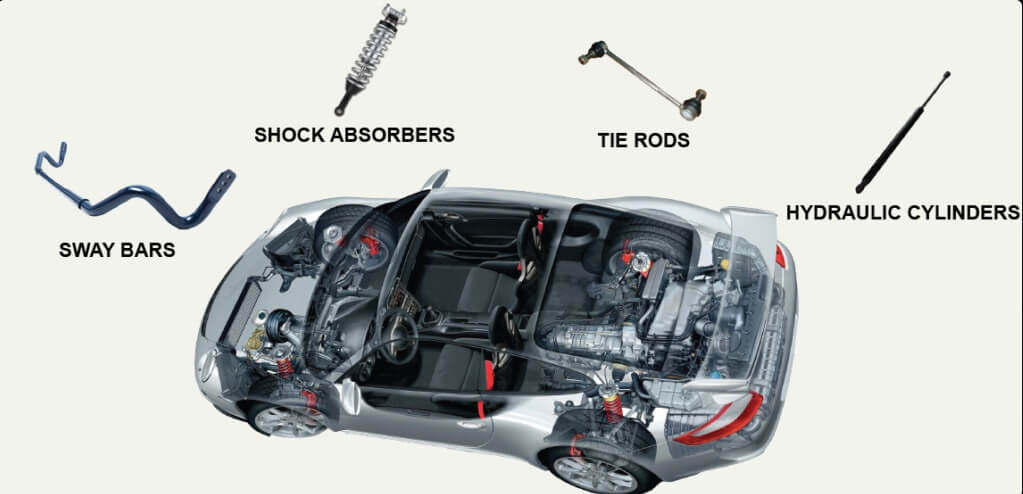
- Suspension Systems: Cold drawn tubes are used in control arms and shock absorber tubes, where their strength and lightweight properties enhance handling and comfort. Their durability under dynamic loads ensures reliable performance in critical components. Automotive suspension design | Role of tubes in vehicle suspension.
- Power Steering Systems: The smooth, uniform surface of cold drawn tubes promotes consistent hydraulic fluid flow, improving responsiveness and reducing driver fatigue, which is essential in power steering systems. Power steering tubing materials | Hydraulics in automotive power steering.
- Transmission Systems: Cold drawn tubes are durable and corrosion-resistant, making them ideal for transmission applications exposed to various environmental conditions. This helps in maintaining reliable performance over time. Steel tubing in transmission systems | Corrosion resistance benefits in automotive.
- Brake Lines: These tubes must withstand high pressure to ensure reliable braking performance, and the seamless construction of cold drawn tubes provides the necessary structural integrity for safety-critical components. Brake line specifications | Safety standards in automotive tubing.
- Fuel Delivery Systems: Precision in diameter and flow rate control is vital in fuel delivery, where cold drawn tubes provide consistency that optimizes combustion efficiency and vehicle performance. Importance of fuel delivery tubing | Fuel efficiency and tube design.
Conclusion
Cold drawn automotive steel tubes are indispensable in the automotive industry due to their enhanced mechanical properties, precise dimensions, and superior surface finishes. Their applications across suspension, power steering, transmission, and braking systems contribute significantly to vehicle safety, performance, and fuel efficiency. By utilizing cold drawing in the manufacturing process, these tubes meet the rigorous demands of modern automotive applications, ensuring high performance and durability.