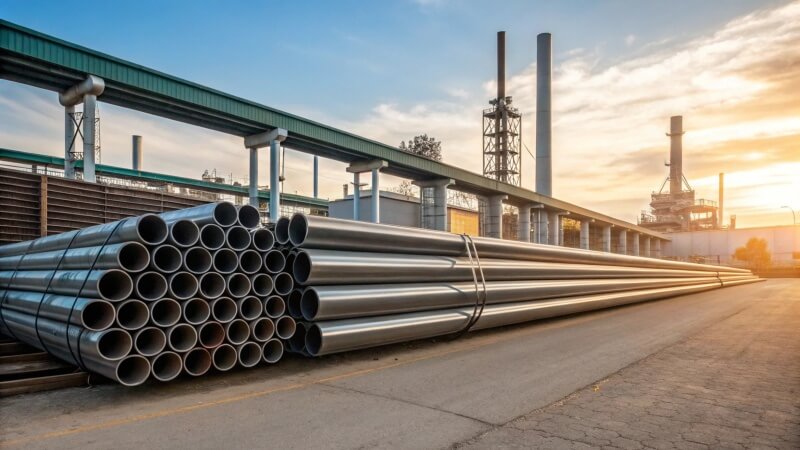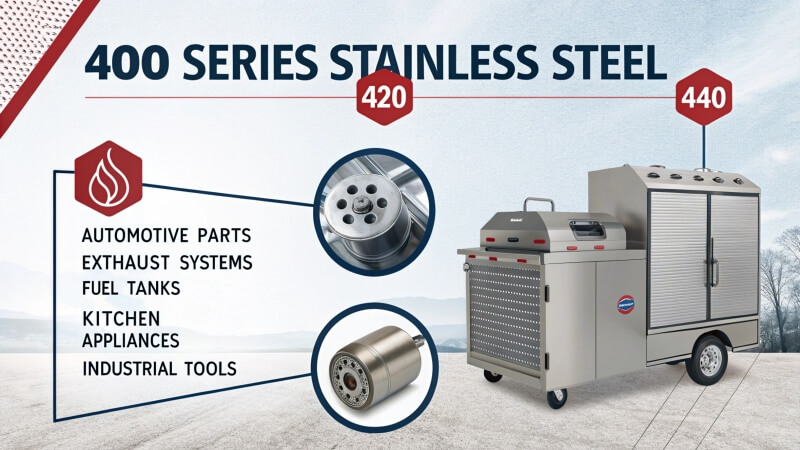

Stainless steel pipes are everywhere, but how are they made? Let’s break it down step by step.
Stainless steel pipes are manufactured using advanced processes like hot rolling, welding, and precise finishing to ensure durability and strength.
Want to know the details? Keep reading for a complete breakdown.
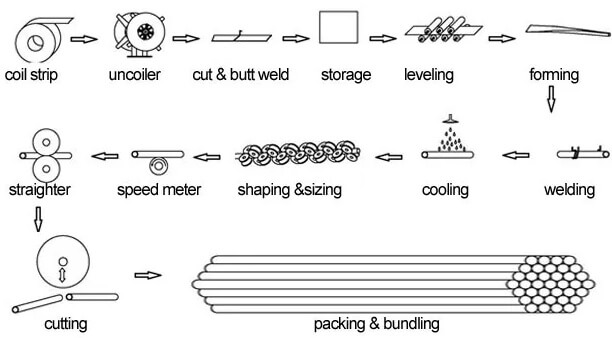
How are steel pipes manufactured[^1]?
Steel pipes are produced through carefully controlled processes for strength and reliability.
Steel pipes are manufactured using processes like hot rolling, extrusion, and welding to form durable and versatile products.
Dive Deeper: Key Steps in Steel Pipe Manufacturing
Steel pipe production starts with raw materials and follows several stages:
- Raw Material Selection: High-quality steel billets or slabs are chosen.
- Hot Rolling: Steel is heated and rolled to achieve the desired shape and size.
- Welding or Seamless Process:
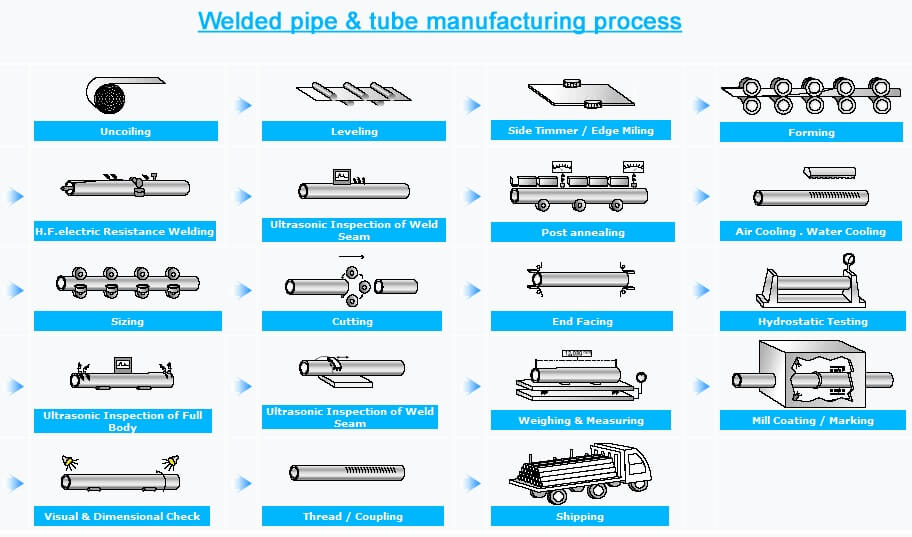
- Welded Pipes: Formed by rolling steel sheets into cylinders and welding the seams.
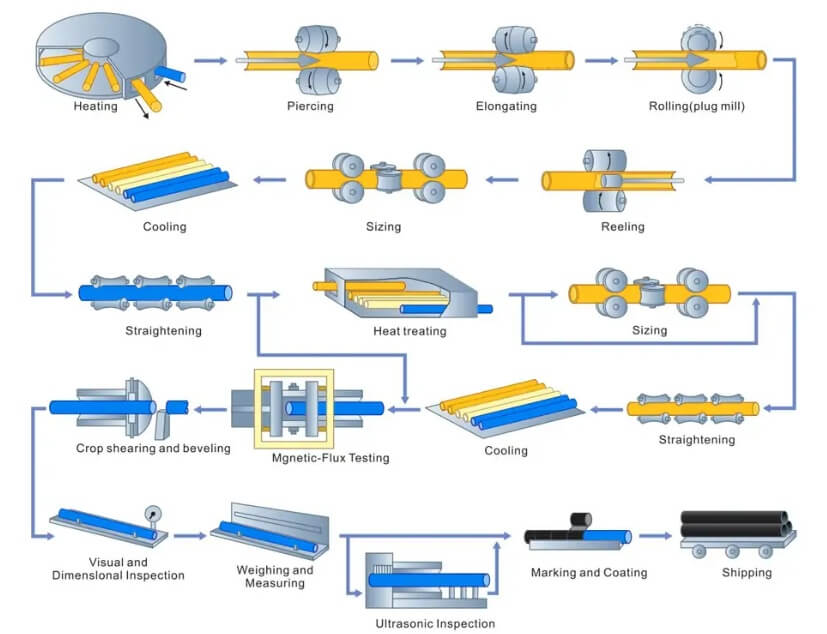
- Seamless Pipes: Created through extrusion for better strength.
Comparison Table: Welded vs. Seamless Pipes[^2]
| Feature | Welded Pipes | Seamless Pipes |
|---|---|---|
| Manufacturing Cost | Lower | Higher |
| Strength | Moderate | High |
| Applications | Low-pressure systems | High-pressure environments |
Steel pipes are widely used in construction, oil and gas, and water transport for their durability and flexibility.
How is stainless steel manufactured[^3]?
Stainless steel production involves combining iron, chromium, and other elements.
Stainless steel is manufactured by melting raw materials, adding alloying elements, and refining the steel for strength and corrosion resistance.
Dive Deeper: Stainless Steel Manufacturing Process
The process starts with essential raw materials like iron, nickel, and chromium.
- Melting: Raw materials are melted in an electric arc furnace (EAF).
- Alloying: Chromium (10-20%) is added to provide corrosion resistance.
- Refining: Impurities are removed to ensure quality.
- Casting: The molten steel is cast into billets or slabs.
- Rolling and Finishing: Steel is hot rolled or cold rolled to achieve specific dimensions.
Common Types of Stainless Steel[^4]
| Type | Key Alloy Elements | Application |
|---|---|---|
| Austenitic (304, 316) | Nickel, Chromium | Food, automotive, construction |
| Ferritic (430) | Chromium | Decorative parts |
| Martensitic (410) | Carbon, Chromium | Cutlery, tools |
Stainless steel's combination of strength and resistance makes it suitable for various applications.
What is the process of manufacturing pipes?
Pipe manufacturing combines material strength with precision processes.
The pipe manufacturing process includes raw material preparation, shaping, heat treatment, and finishing for strength and durability.
Dive Deeper: Step-by-Step Pipe Manufacturing
Pipes are created through multiple stages, depending on their type:
- Material Selection: Choosing the correct raw material for the application.
- Shaping the Pipe:
- Seamless Pipes: Produced using hot extrusion.
- Welded Pipes: Rolled sheets are joined using electric resistance welding (ERW).
- Heat Treatment: Pipes are heat treated to enhance mechanical properties.
- Finishing and Testing: Pipes undergo surface finishing, cutting, and quality testing.
Importance of Testing in Pipe Manufacturing
Quality testing ensures reliability under pressure.
| Test Type | Purpose |
|---|---|
| Hydrostatic Testing | Ensures no leaks under pressure |
| Ultrasonic Testing | Detects internal flaws |
| Dimensional Inspection | Checks wall thickness and diameter |
This process guarantees pipes that meet international standards for safety and performance.
What is stainless steel pipe made of[^5]?
Stainless steel pipes are composed of durable alloying elements.
Stainless steel pipes are made of iron, chromium, nickel, and other elements, providing strength, corrosion resistance, and longevity.
Dive Deeper: Composition of Stainless Steel Pipes
The primary elements in stainless steel pipes include:
- Iron: The base material.
- Chromium: Provides corrosion resistance (10-20%).
- Nickel: Improves ductility and strength.
- Carbon: Enhances hardness and durability.
Key Alloying Elements and Their Roles
| Element | Role in Stainless Steel |
|---|---|
| Chromium | Corrosion resistance |
| Nickel | Strength and ductility |
| Molybdenum | Improved resistance to pitting |
| Carbon | Increases hardness |
Stainless steel pipes use this combination of elements to deliver unmatched reliability in demanding environments like construction, water transport, and manufacturing.
Conclusion
- Steel pipes are manufactured using hot rolling, extrusion, or welding processes.
- Stainless steel is made by melting and refining iron, chromium, and nickel.
- Pipe manufacturing includes shaping, heat treatment, and testing for strength.
- Seamless and welded pipes differ in cost and strength.
- Stainless steel pipes are composed of iron, chromium, and nickel for durability.
Stainless steel pipes deliver durability, strength, and resistance, making them perfect for industrial and commercial uses.