The 400 series stainless steel sheets are versatile and durable, making them a reliable material for many industries.
The 400 series stainless steel sheets are known for their strength, corrosion resistance, and affordability. They are widely used in industrial and domestic applications.
Discover how the 400 series stainless steel sheets compare with other grades and explore their best uses.
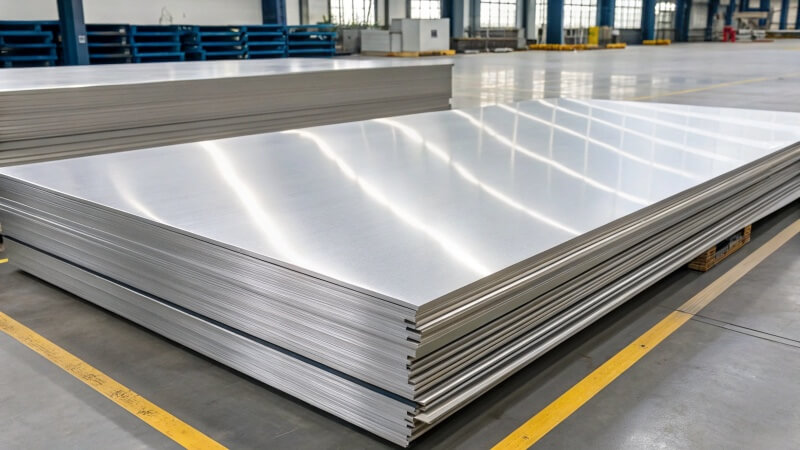
What is 400 series stainless steel used for?
The 400 series stainless steel sheets are valued for their affordability and strength, solving issues of cost-effectiveness and durability.
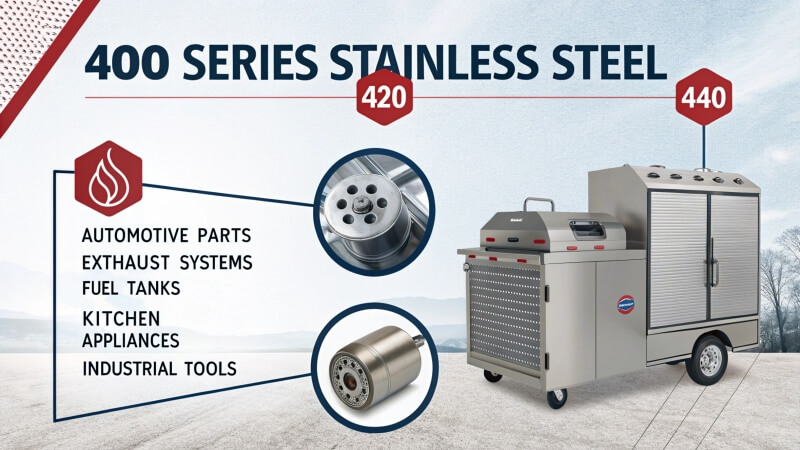
400 series stainless steel is commonly used in automotive parts, kitchen appliances, and industrial tools. Its magnetic properties make it distinct.
Understanding the Applications of 400 Series Stainless Steel
The 400 series stainless steel is primarily ferritic and martensitic, offering a balance of strength, corrosion resistance, and heat tolerance. Here’s how it excels in different sectors:
Automotive Applications
- Used in exhaust systems, fuel tanks, and decorative trims.
- Its corrosion resistance ensures longevity in vehicles.
Industrial Tools
- Commonly found in cutting tools and molds.
- The high hardness of 420 and 440 grades is ideal for wear resistance.
Kitchen Appliances
- Applied in knife blades, sink bowls, and cookware.
- Its food-grade variants ensure safety and durability.
| Grade | Magnetic? | Food Safe? | Key Use Cases |
|---|---|---|---|
| 409 | Yes | No | Automotive exhausts |
| 420 | Yes | Yes | Knives, kitchen utensils |
| 440 | Yes | Yes | High-end cutting tools, surgical use |
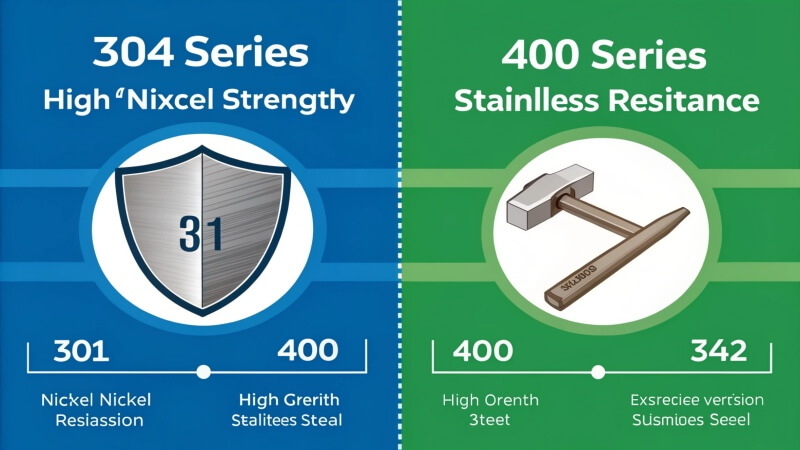
Which is better, 304 or 400 stainless steel?
Comparing 400 series to 304 stainless steel highlights differences in strength and corrosion resistance, helping buyers choose wisely.
304 stainless steel offers better corrosion resistance, while 400 series is stronger and more heat-resistant.
Key Differences Between 304 and 400 Series Stainless Steel
304 stainless steel is an austenitic grade, offering excellent corrosion resistance due to its high nickel content. In contrast, 400 series grades, like 420 and 440, are martensitic or ferritic, providing higher strength and hardness.
Comparison of Properties
| Property | 304 Stainless Steel | 400 Series Stainless Steel |
|---|---|---|
| Corrosion Resistance | High | Moderate |
| Magnetic Properties | Non-Magnetic | Magnetic |
| Hardness | Moderate | High |
| Cost | Higher | Lower |
While 304 is ideal for outdoor or chemical environments, the 400 series works better in wear-intensive and heat-related applications.
TEMPLATE_START
What is the significance of 400 series stainless steel sheets?
The 400 series stainless steel sheets are versatile and durable, making them a reliable material for many industries.
The 400 series stainless steel sheets are known for their strength, corrosion resistance, and affordability. They are widely used in industrial and domestic applications.
Discover how the 400 series stainless steel sheets compare with other grades and explore their best uses.
Which is better, 440 or 420 stainless steel?
Choosing between 440 and 420 stainless steel depends on balancing hardness and corrosion resistance for specific needs.
440 stainless steel offers superior hardness, while 420 is easier to machine and polish, making it suitable for different applications.
Comparing 440 and 420 Grades
Hardness and Strength
- 440 steel is harder and more wear-resistant.
- Ideal for high-end knives and surgical instruments.
Ease of Machining
- 420 steel is softer and easier to shape.
- Suitable for mid-range blades and industrial tools.
| Feature | 420 Stainless Steel | 440 Stainless Steel |
|---|---|---|
| Hardness | Medium | Very High |
| Corrosion Resistance | Moderate | High |
| Cost | Lower | Higher |
For precision tools, 440 is better. For cost-sensitive applications, 420 is more practical.
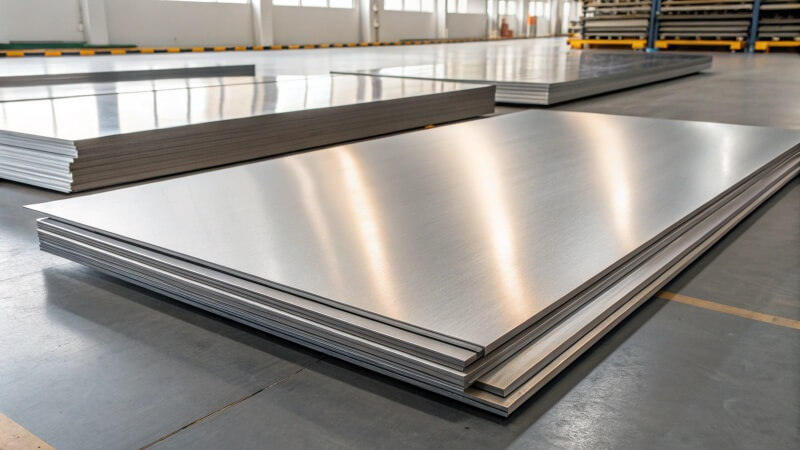
What number of stainless steel is best?
Determining the "best" stainless steel grade depends on balancing specific needs like corrosion resistance, strength, and cost.
There’s no universal “best” grade; 304 and 400 series are among the most widely used for their versatility.
Best Stainless Steel Grades for Different Applications
304: Best for Corrosion Resistance
- Ideal for marine environments and chemical exposure.
316: Best for Extreme Environments
- More resistant to corrosion due to molybdenum content.
400 Series: Best for Strength and Magnetism
- Perfect for tools, appliances, and automotive parts.
420 and 440: Best for Cutting Tools
- High hardness and wear resistance make them the preferred choice for knives and blades.
| Use Case | Recommended Grade |
|---|---|
| Marine Equipment | 316 |
| Automotive Components | 409 or 430 |
| Food Processing | 304 or 420 |
| Industrial Tools | 440 |
Conclusion
In summary, the 400 series stainless steel sheets offer a unique balance of affordability, strength, and heat resistance. Here are the key points:
- 400 series is widely used in automotive, kitchen, and industrial applications.
- Compared to 304, the 400 series excels in strength but has lower corrosion resistance.
- Between 420 and 440 grades, the choice depends on hardness and machining ease.
- There is no universal “best” grade; suitability depends on application needs.
- The 400 series is magnetic, affordable, and highly versatile.
Choose the right stainless steel grade to meet your specific needs!